




Probably the attic is full of years worth of stuff you have been meaning to do something with that includes dust boxes, containers to throw away and seasonal decorations you forgot.
I will show you how to clean an attic from start to finish. The process involves safety prep, decluttering, thorough cleaning, and setting up systems for the future in order to keep your attic organized and clean.
It’ll show you how to sort everything, what to do with the things you are sentimental about, and how to create a really effective storage area.
A clean attic is a less-stressed life. Transform that cluttered mess into organized and easy storage.
Preparing to Clean Attic
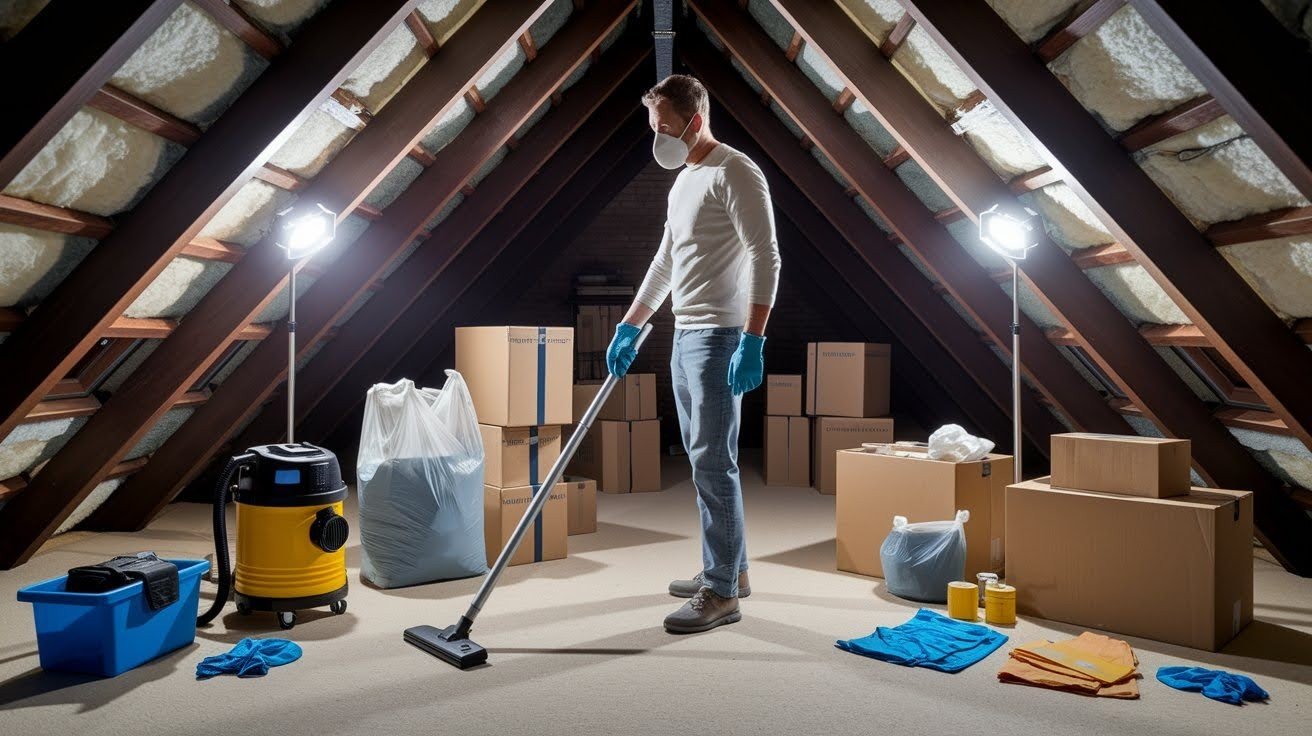
Proper preparation makes attic cleaning safer and more efficient. Wear a dust mask, gloves, long sleeves, pants, and closed-toe shoes to protect from dust, splinters, and sharp objects.
Bring battery-powered lamps or portable shop lights for adequate lighting, and step only on rafters or installed flooring to avoid breaking through the ceiling.
Collect heavy-duty trash bags, sturdy boxes or bins, labels, Sharpies, and packing tape for organization. Bring a vacuum with attachments, a broom with extension handle, and microfiber dusting cloths for cleaning.
Designate a nearby room as your sorting headquarters with three distinct zones marked “keep,” “donate or sell,” and “trash” to speed up decision-making and maintain working space.
Decluttering Attic

Removing unwanted items creates space and reveals what you actually need to store. This step takes the most time but produces the biggest impact.
Take Inventory and Sort
Open every box or container methodically and examine each item, deciding immediately whether to keep, toss, or donate it.
Group similar items together and work section by section rather than randomly pulling boxes to prevent overwhelm and show progress.
Handle Sentimental Items Carefully
Set aside emotionally significant items for later review when you’re less tired. Consider photographing items you can’t keep but want to remember, and ask family members if they want inherited items before discarding them.
Remove Unwanted Items
Take trash to the dump or curb immediately after sorting, and deliver donations to centers within days. Avoid moving clutter to other areas of your home-deal with items decisively now.
Cleaning Attic
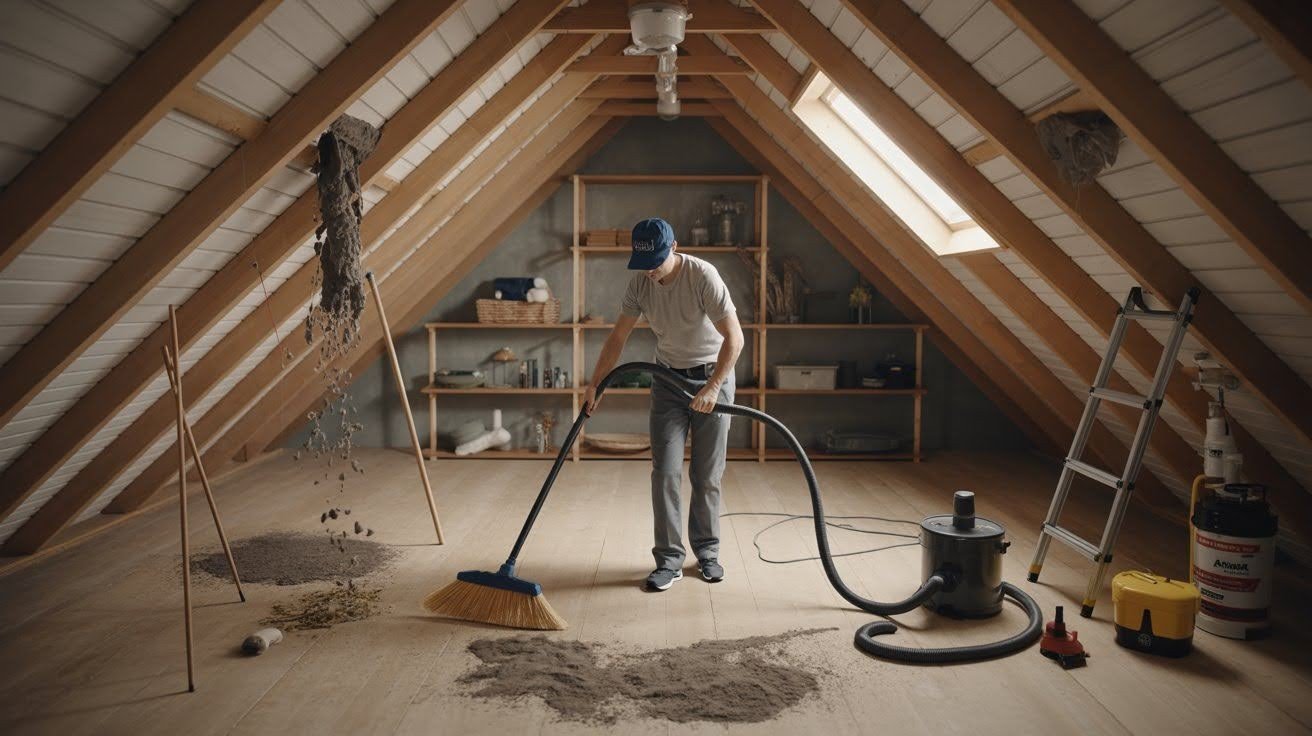
Once decluttering finishes, deep cleaning reveals your attic’s true potential. This phase creates a fresh, safe storage environment.
Dust and Vacuum
Remove cobwebs from rafters, corners, and ceiling areas using a broom with extension handle or vacuum attachment.
Vacuum all floor surfaces thoroughly including around insulation edges, and wipe down shelving, light fixtures, and exposed beams.
Inspect for Pests
Look for mouse droppings, insect nests, or signs of animal activity. Address pest problems immediately before reorganizing, seal entry points with steel wool and caulk, and call exterminators for serious infestations.
Repair and Maintain
Check insulation for compression, water damage, or missing sections and replace as needed. Inspect electrical wiring for damage and hire electricians for concerns.
Look for roof leaks like water stains and address structural problems immediately to protect everything you store.
Organizing and Storing Items
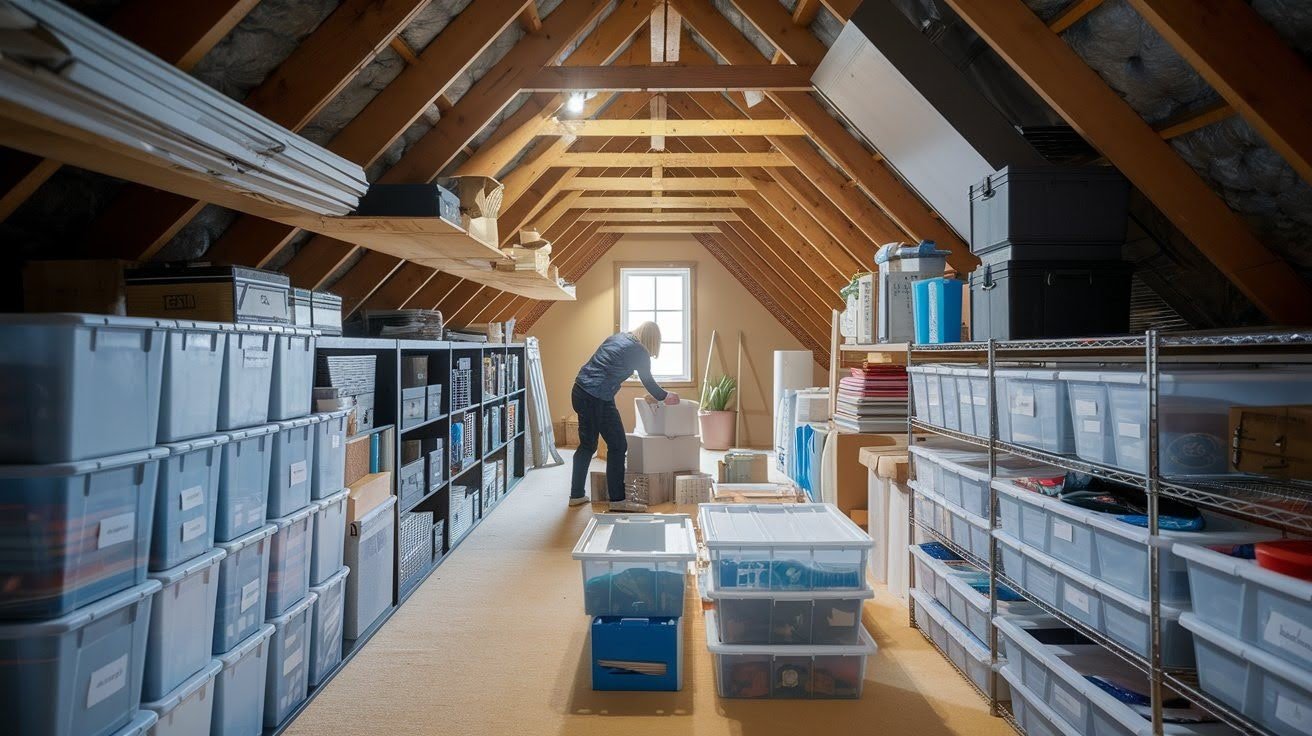
Smart organization systems make your attic functional and accessible. Proper storage protects belongings and maximizes space.
Choose the Right Storage
Use clear plastic bins to see contents and protect against moisture and pests. Store important papers in fire-proof lockboxes.
Avoid storing electronics, photographs, or heat-sensitive items as extreme temperatures cause permanent damage.
Organize Strategically
Place frequently used items near the entrance and seasonal items together in clearly labeled bins.
Create a master inventory list outside the attic and update it when adding or removing items.
Optimize Space
Add shelving units to maximize vertical storage and use eaves for long, flat items.
Keep clear pathways for safe movement and stack bins with heavier items on bottom.
Maintaining a Clean Attic
- Inspect every few months for dust, pest activity, or water damage. Quick 15-minute checks catch problems early.
- Rotate seasonal items efficiently and declutter anything unused for two years.
- Maintain labeling systems and update inventory lists immediately when adding new items.
- Follow your organizational system strictly instead of dumping items randomly in available spaces.
- Schedule annual deep cleaning sessions to remove everything, clean thoroughly, and reorganize.
Conclusion
When I cleaned throughout my grandmother’s attic last year, it was like going on a treasure hunt I did not know I was on. Cleaning your attic is something to learn.
Understanding the process matters. Stay safe, move through it section by section and don’t feel a rush to do it.
An organized attic makes finding things easy. It also gives you real peace of mind through it.
Ready to get started? Share your attic-cleaning wins or concerns within the comments. I want to hear how it goes.
Frequently Asked Questions
How long does it take to clean an attic?
A typical residential attic takes 8 to 16 hours spread over several days. Heavily cluttered spaces need more time.
What should never be stored in an attic?
Never store photographs, electronics, important documents, or heat-sensitive items in unconditioned attics. Avoid food, paint, or pressurized containers that temperature changes affect.
How do I deal with attic dust safely?
Always wear a quality N95-rated dust mask and open windows for ventilation. Use HEPA-filter vacuums and shower immediately after finishing.
Should I hire professionals to clean my attic?
Consider professionals if you have mobility issues, severe pest infestations, suspected mold, or hazardous materials like asbestos. Otherwise, DIY cleaning works fine with proper safety precautions.
How often should I organize my attic?
Inspect every 3 to 6 months for pests and damage. Perform light decluttering when rotating seasonal items twice yearly, and schedule thorough deep cleaning annually.