




Your clothes’ repeated trips through your dryer waste time, energy, and money from failing to dry the first time. Will blocked dryer vents keep clothing damp? This is a possibility.
Sure! A clogged dryer vent can greatly impact your dryer’s efficiency from here, and here’s what it can do and how to rectify it.
This guide explains how clogs affect airflow, trap moisture and cause a safety risk. Recognize a clog then remove it.
You can also learn about cleaning the system and avoiding future clogs. Trust me, fixing this problem improves drying times for your home. Let’s get your dryer working properly again.
How a Clogged Dryer Vent Affects Drying
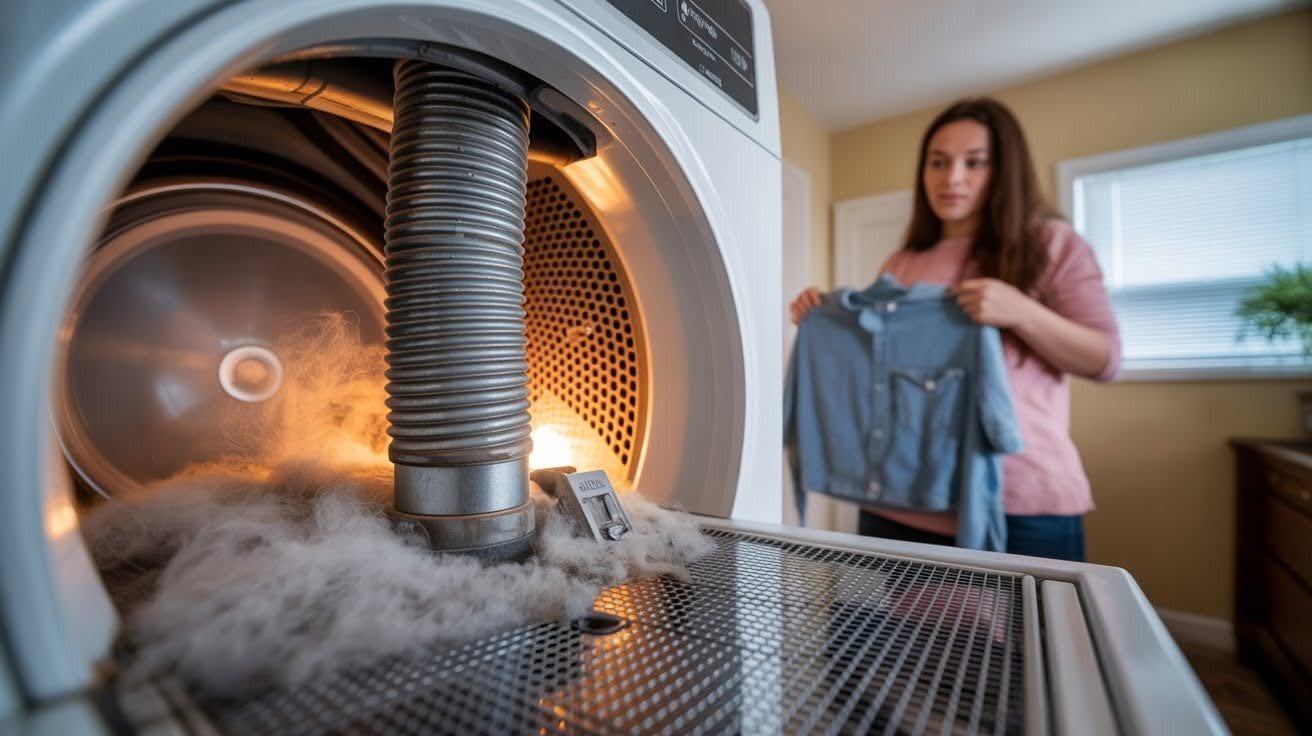
A clogged dryer vent restricts airflow, traps moisture and heat inside the drum, and causes dangerous overheating that damages components.
Reduced Airflow
Lint and debris create blockages that restrict air movement needed to carry moisture away from clothes. Severe blockages cut airflow dramatically, leaving clothes damp no matter how long the cycle runs.
Trapped Heat and Moisture
Blocked vents trap hot, moist air inside the drum that can’t carry away additional moisture. The saturated environment prevents drying, leaving clothes damp even after 60 minutes or longer.
Overheating of the Dryer
Restricted airflow causes dangerous temperature buildup that triggers safety mechanisms, shutting down the heating element. Long-term overheating damages components like heating elements and blower motors, causing repairs costing hundreds of dollars.
Warning Signs Your Dryer Vent Is Clogged
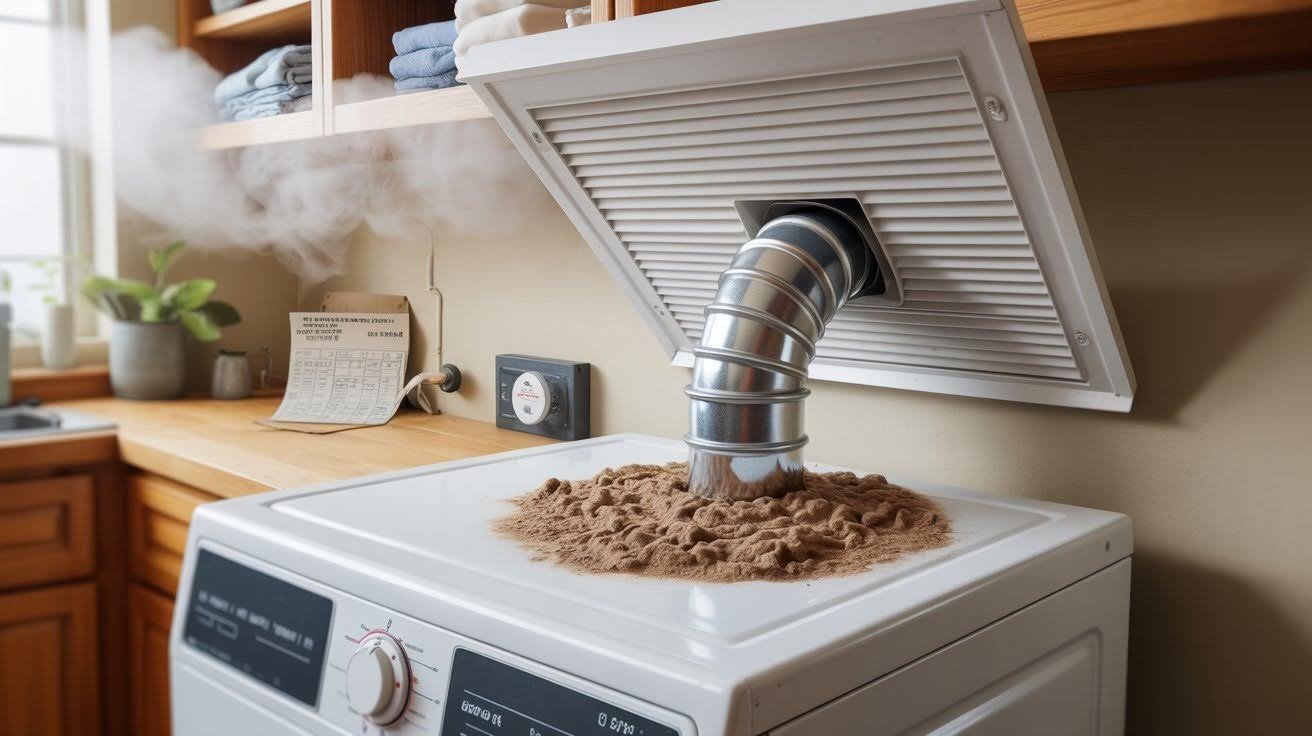
Recognizing these symptoms early prevents safety hazards and expensive repairs. Pay attention to changes in your dryer’s performance.
Clothes Take Longer to Dry
Laundry remaining damp after a normal cycle signals airflow problems. You shouldn’t need to run your dryer twice for a regular load, especially for heavy items like towels and jeans.
Laundry Feels Hot After Drying
Clothes coming out hotter than usual indicate poor heat dissipation. Normal dryers vent excess heat outside continuously, but clogs trap that heat with your laundry.
Dryer Feels Hot to the Touch
The dryer’s exterior should feel warm but not hot during operation. Burning heat on top and sides signals serious ventilation issues and dangerous internal temperatures.
Unusual Smells
A burnt odor means lint or dust is overheating and often precedes fires. Musty or moldy smells indicate trapped moisture creating mold growth in the system.
Vent Hood Flap Doesn’t Open
Check your exterior vent while the dryer runs-the hood flap should open from air pressure. A closed flap or visible lint accumulation around the opening confirms blockages inside.
Long Time Since Last Cleaning
Dryer vents need inspection at least once yearly, with heavy-use households requiring cleaning every six months. Neglected vents inevitably clog over time.
Higher Energy Bills
Extended drying cycles consume significantly more electricity or gas. Compare recent bills to previous years, unexplained increases might trace back to dryer inefficiency.
Damage or Blockage in Vent Duct
Crushed, bent, or disconnected ducting stops airflow completely. Lint collects in tight corners, elbows, and transition points faster than straight runs.
What to Do If Your Dryer Vent Is Clogged
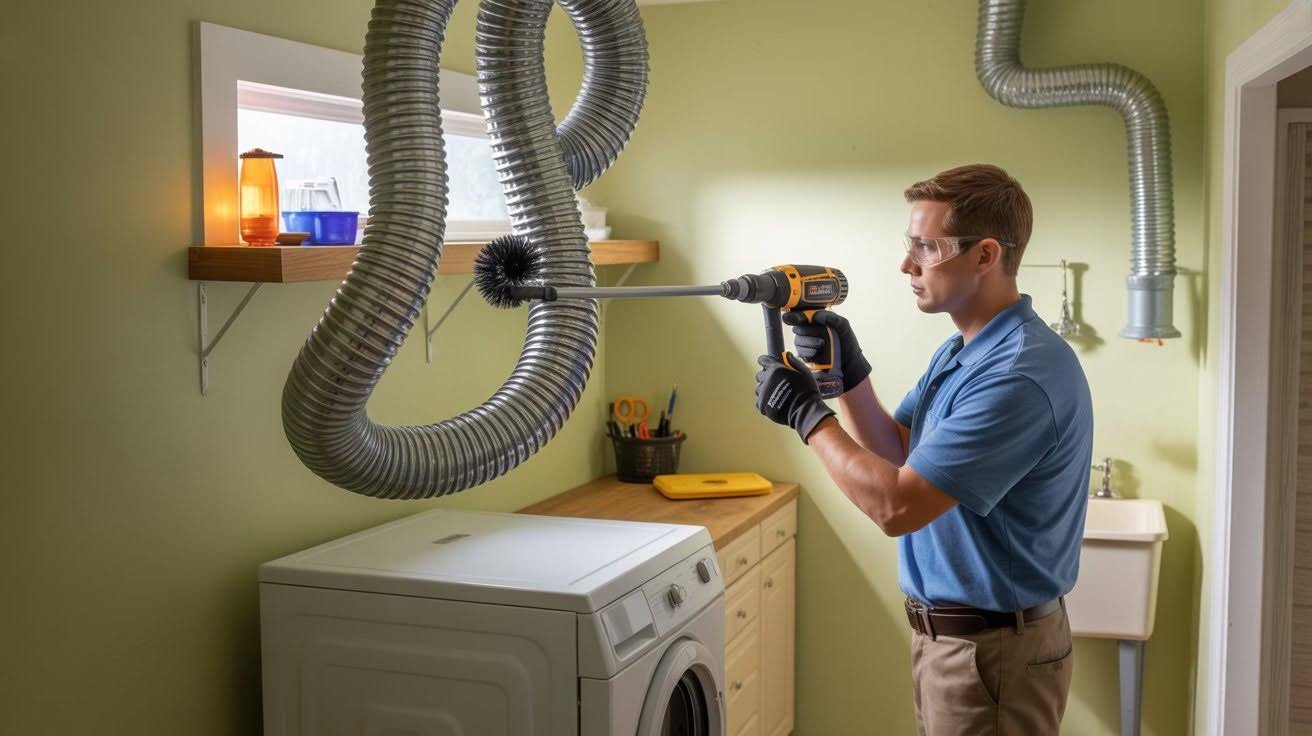
Taking action quickly prevents fires and restores proper drying. You have several effective options for clearing clogs.
Professional Cleaning
Hiring experienced technicians guarantees thorough cleaning with specialized equipment. Trained cleaners spot problems like damaged ducts or safety hazards. Typical professional cleaning costs $75 to $150 with work guarantees.
DIY Dryer Vent Cleaning
Purchase a cleaning kit for $20 to $50 with flexible brushes that attach to power drills. Turn off power at the breaker, disconnect your dryer, and clean from both sides.
Short, straight ducts work for DIY, while long runs require professional equipment.
Inspecting for Damage or Blockages
Examine duct sections for crushed areas, holes, or disconnected joints and replace damaged sections. Verify connections fit tightly and replace flexible ducting with rigid metal pipes that stay cleaner longer.
Preventive Tips to Avoid Dryer Vent Clogs
- Clean the lint trap after every single load. This five-second step prevents lint from traveling into your vents and causing major problems.
- Schedule regular professional inspections and cleanings. Annual service catches problems before they become serious, with frequent dryer use requiring more frequent cleaning.
- Avoid overloading the dryer beyond manufacturer recommendations. Packed drums restrict airflow and increase lint production, so run smaller loads more often.
- Dry similar fabric types together for efficient drying. Heavy towels mixed with light shirts create uneven drying and reduce overall efficiency.
Conclusion
I ignored my dryer vent until my clothes took three cycles to dry. Do not make that same mistake again.
A clogged dryer vent stops clothes from drying. It can endanger you plus your family. Clean your dryer vent regularly. Be aware of warning signs in order to indicate an issue.
If you wish to appoint a time or spend a few hours this weekend doing it yourself, feel free to comment with specific questions.
Frequently Asked Questions
How often should I clean my dryer vent?
Clean your dryer vent at least once yearly for typical household use. Families doing multiple loads daily need cleaning every six months.
Can I clean my dryer vent myself?
You can clean short, straight vents yourself using hardware store kits costing $20 to $50. Long ducts with multiple turns require professional equipment.
What happens if I never clean my dryer vent?
Neglected vents eventually cause dryer fires from lint ignition. Your dryer will work harder, cost more to operate, and wear out faster.
How do I know if my dryer vent is clogged?
Clothes taking longer than one cycle to dry, hot exterior panels, burning smells, and excessive lint around the outside vent indicate blockages.
Does a clogged vent damage my dryer?
Yes, restricted airflow causes overheating that damages heating elements, thermal fuses, and motors. Regular vent cleaning extends dryer lifespan and prevents expensive repairs.