



Popcorn ceilings can be tricky to clean. You know those bumpy, textured ceilings from the 70s and 80s?
They collect dust like crazy, but one wrong move and you might damage the surface. If you’ve been putting off cleaning yours, you’re not alone.
Homeowners across cleaning forums and online communities constantly swap stories about their successes and failures. The good news?
We’ve gathered the best tried-and-tested methods that actually work.
This guide brings you safe, simple tips that real people have used in their own homes. Let’s get your ceiling looking fresh again.
Understanding Popcorn Ceilings
Before you start cleaning, know what makes these ceilings tricky and why asbestos testing matters for your safety.
What Makes Popcorn Ceilings Hard to Clean
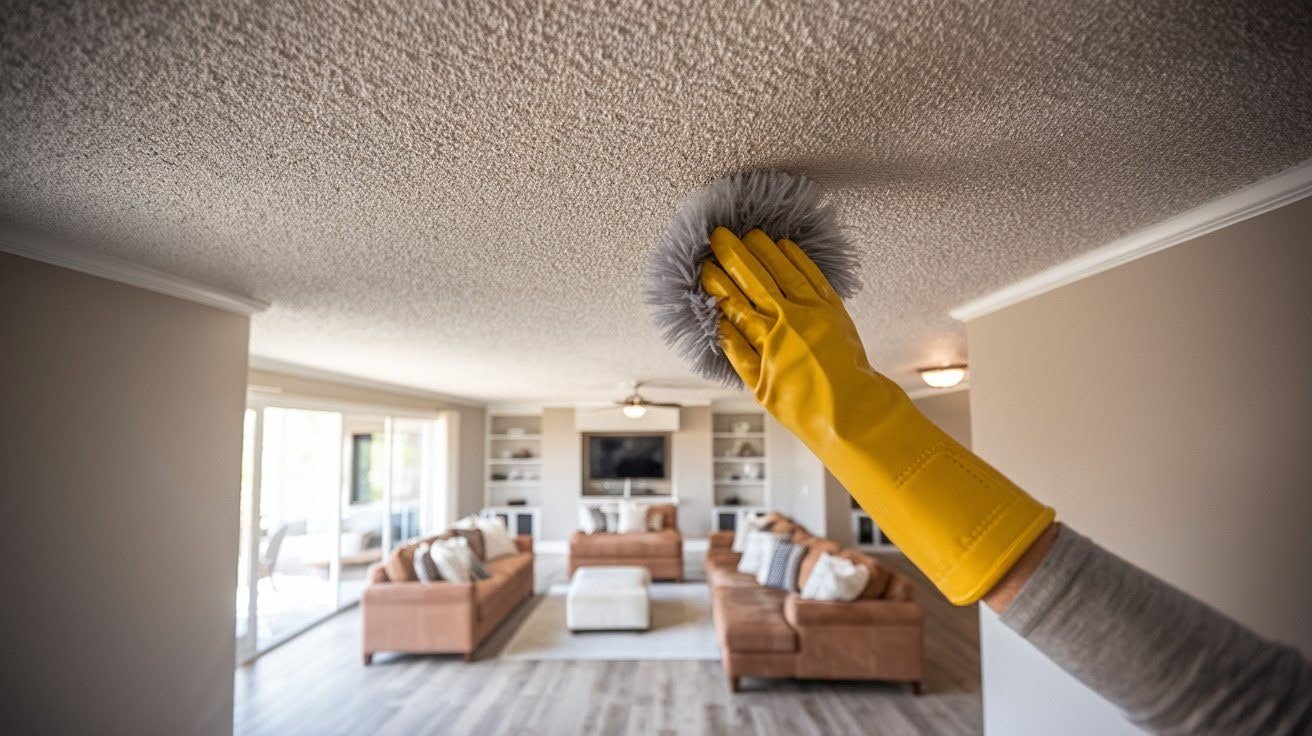
Popcorn ceilings have a bumpy, textured surface that acts like a dust magnet. All those little peaks and valleys catch dirt, cobwebs, and stains over time. The texture makes it tough to wipe clean like a flat ceiling.
Here’s the bigger problem. If you use too much water or scrub too hard, the texture can fall right off. You’ll end up with bare patches that look worse than the dirt. That’s why cleaning these ceilings requires a gentle touch and the right approach.
Check for Asbestos Before You Start
This step is critical, especially if your home was built before 1980. Many popcorn ceilings from that era contain asbestos fibers. When disturbed, these fibers become airborne and can cause serious health issues.
Look for these warning signs. If your ceiling is discolored, crumbling, or hasn’t been tested before, don’t take chances. You can’t identify asbestos just by looking at it.
The safest move? Hire a certified asbestos testing service. They’ll take a sample and analyze it in a lab. If asbestos is present, call professional abatement specialists. Don’t attempt to clean or remove it yourself. Your health is worth more than saving a few dollars.
Best Ways to Clean a Popcorn Ceiling
Learn the top methods that actually work for removing dust, dirt, and stains from textured ceilings without causing damage.
1. Use a Vacuum with a Brush Attachment
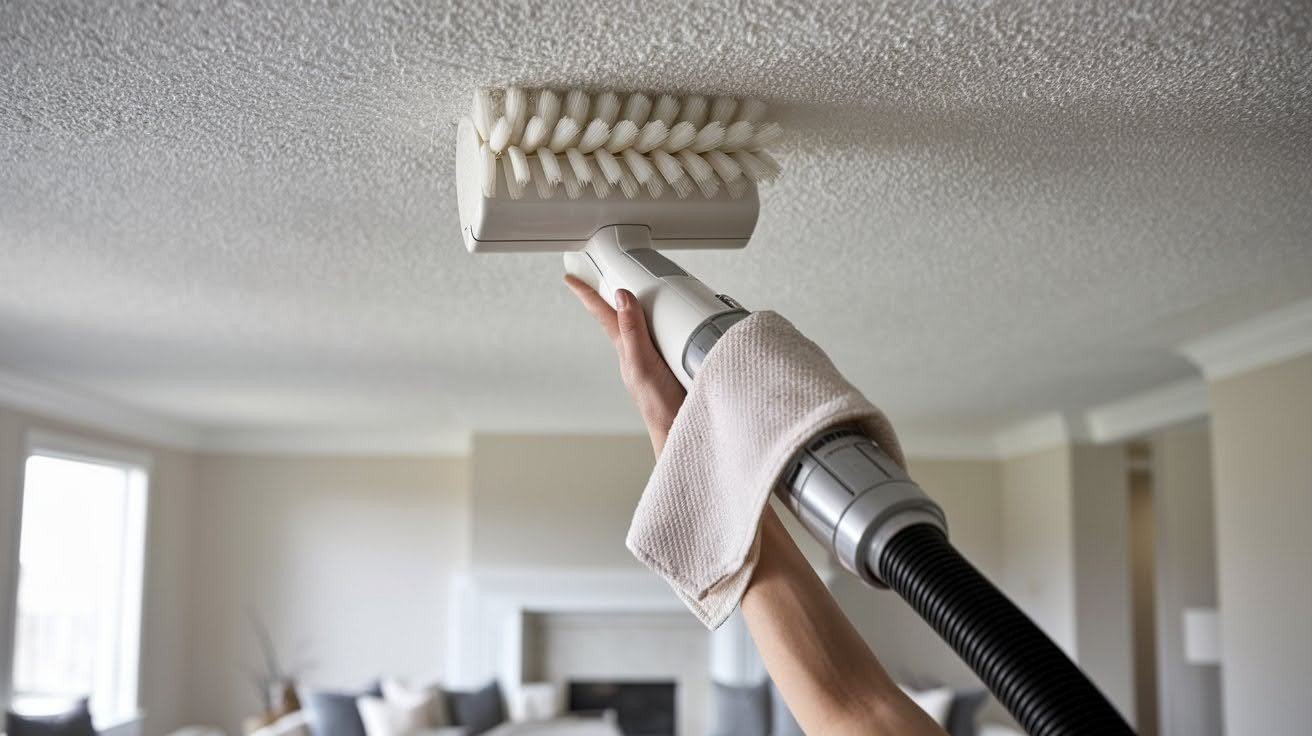
A vacuum with a soft brush attachment is one of the safest cleaning methods. Set up a sturdy ladder and attach a soft brush head to your vacuum hose. Avoid hard bristles that can damage the texture.
Use low or medium suction and move the brush slowly across the ceiling. Don’t press hard. Let the vacuum do the work.
Here’s a helpful trick from cleaning communities. Wrap your brush head in a clean microfiber cloth and secure it with a rubber band. This adds extra protection and catches more dust.
2. Try a Lint Roller or Sticky Paint Roller
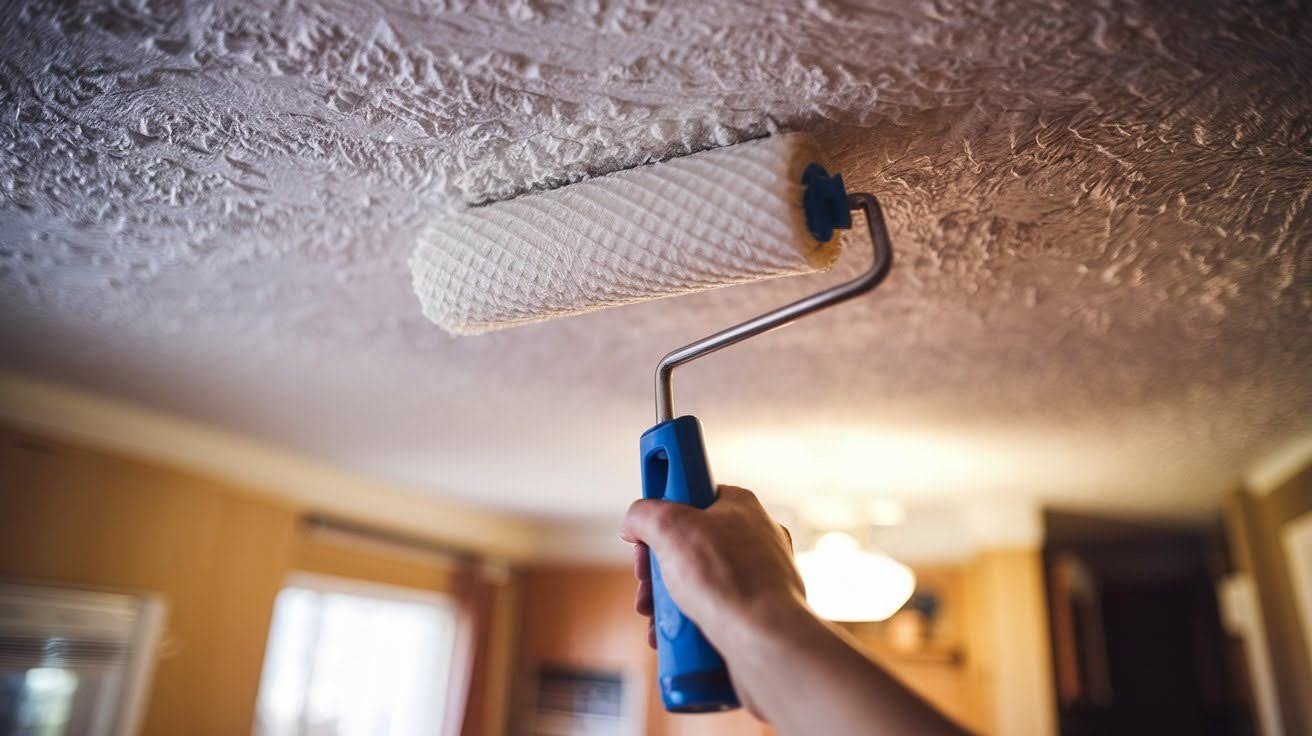
Lint rollers work great for light dust and cobwebs. They’re perfect for low ceilings or small spaces like closets and bathrooms.
For higher ceilings, attach the roller to an extendable handle. This tip comes from online forums where homeowners love how easy it makes the job. Roll gently over the ceiling and replace sheets as they fill up.
3. Use a Feather Duster or Microfiber Duster
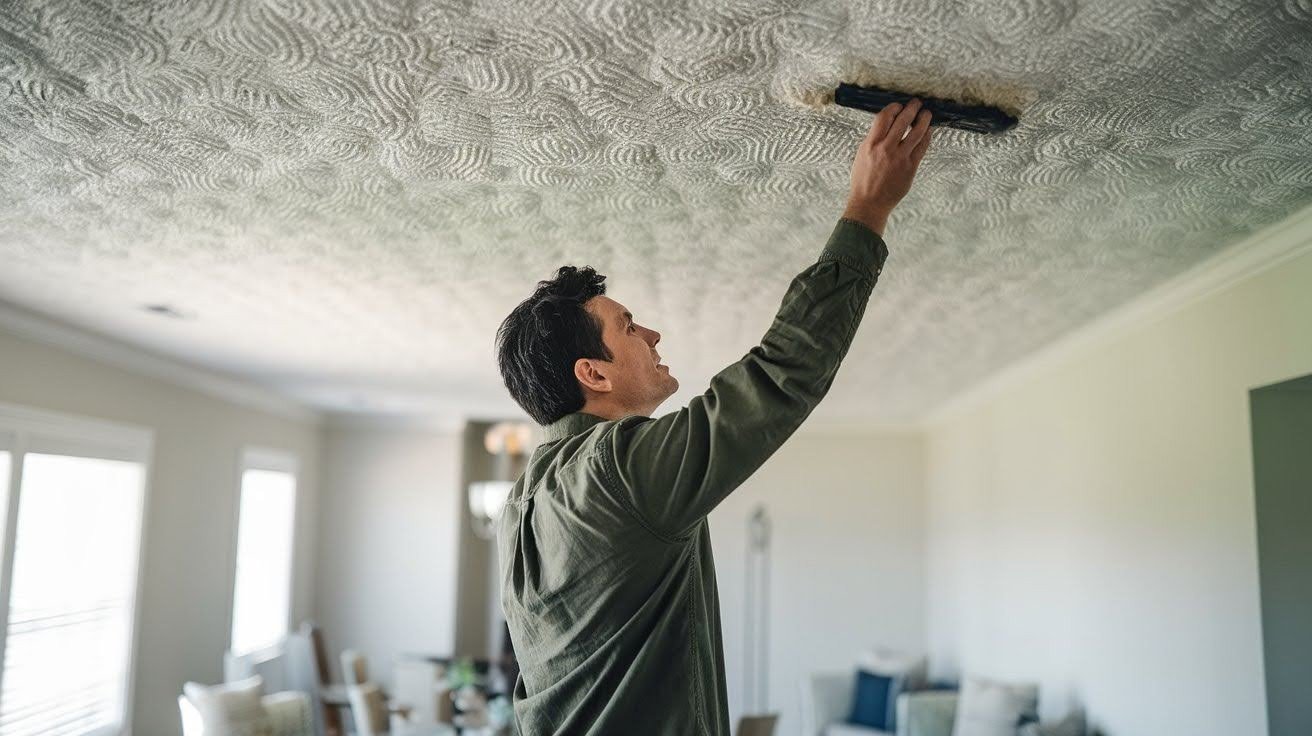
Dusting is the gentlest method for regular maintenance. Use dry dusting for light cleaning. For heavier dust buildup, slightly dampen your duster.
Use gentle sweeping motions and work in sections. Here’s a pro tip from cleaning groups. Lightly mist your duster with water before you start. This helps trap fine dust instead of spreading it around.
4. Treat Stains with a Safe Cleaning Solution
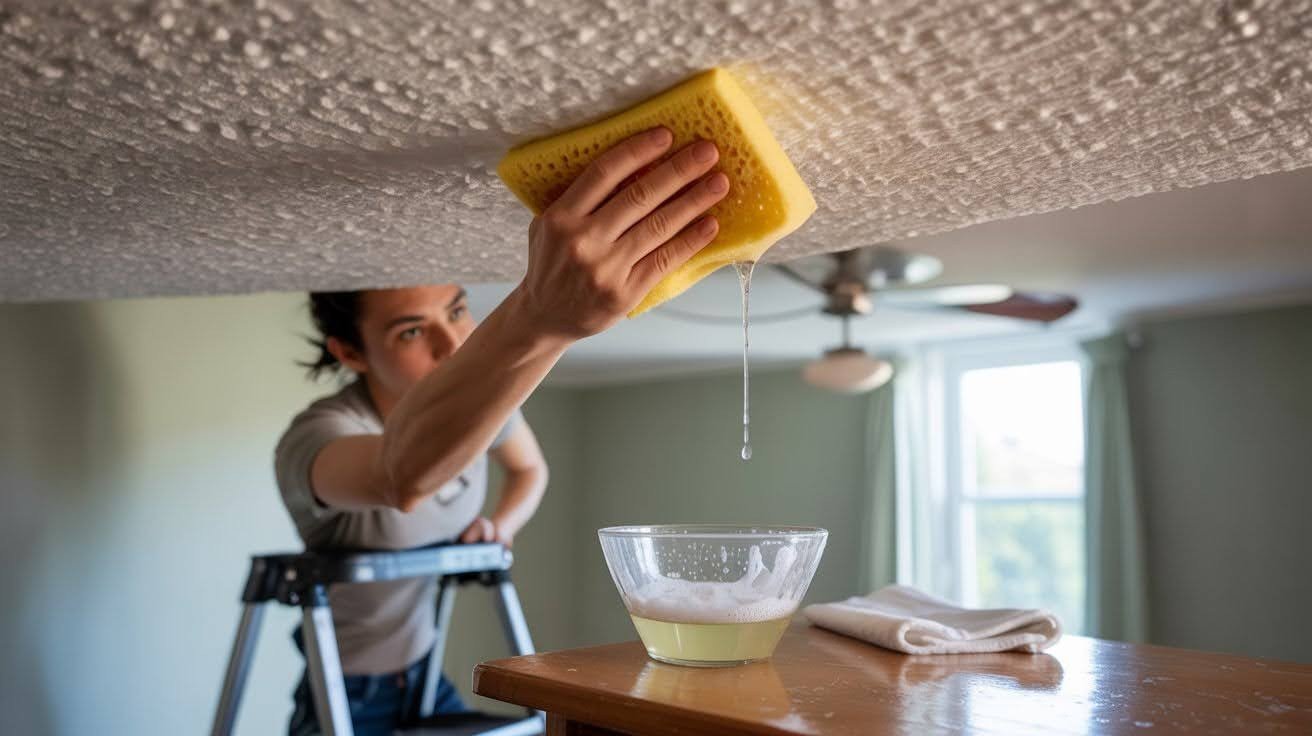
For everyday stains, mix a few drops of mild dish soap with warm water. For mildew or water stains, use one part bleach mixed with four parts water.
Always test your solution on a hidden spot first. Wait 10 minutes to check for damage. Dip a sponge in the solution and wring it out well. It should be damp, not dripping.
Gently blot the stained area. Don’t rub or scrub. Blot again with a clean, damp cloth. Set up fans to dry the area quickly. This prevents water damage and stops mold from forming.
Painting Over Persistent Stains
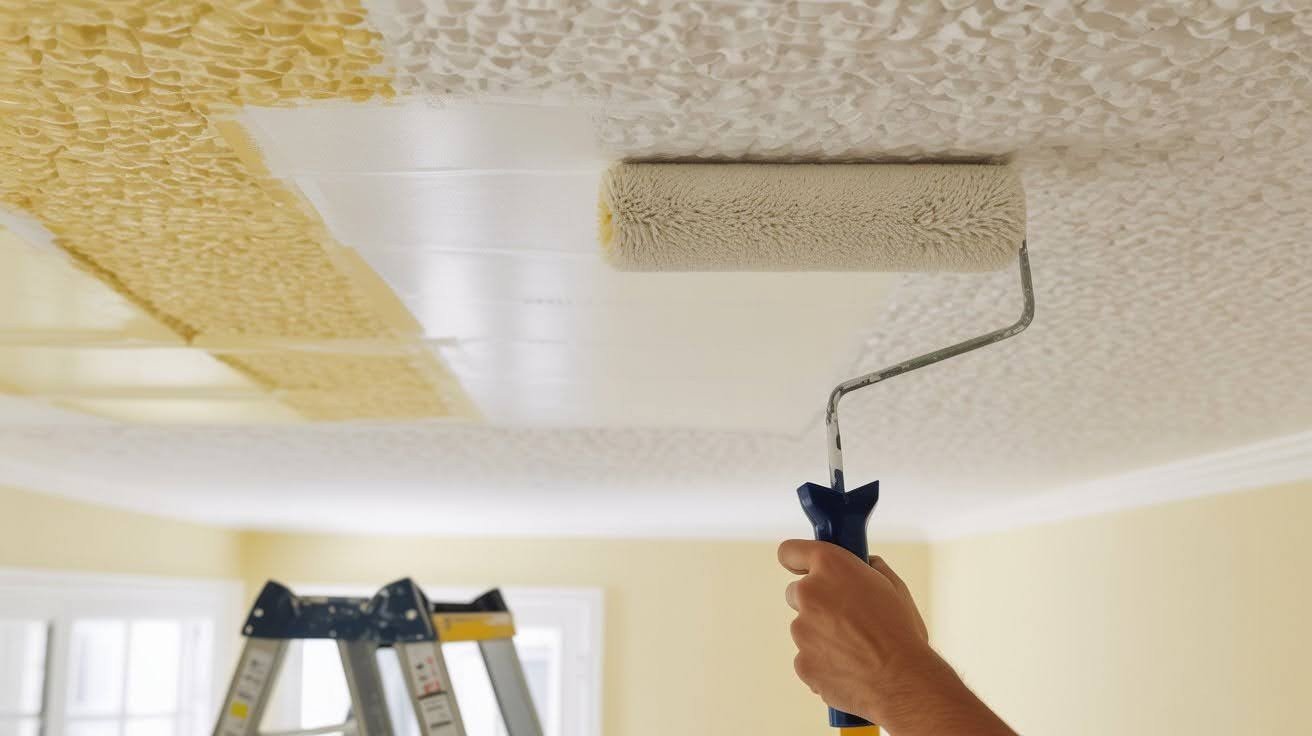
Sometimes cleaning isn’t enough. If your ceiling has stubborn yellowing, smoke stains, or flaking texture, repainting is your best option.
Start with a stain-blocking primer to seal in old stains. Then apply flat ceiling paint using a thick-nap roller (1/2-inch to 3/4-inch) to maintain the texture.
Roll in one direction, then the opposite direction for even coverage. Work in small sections and don’t go over the same spot too many times, or you’ll flatten the texture.
When to Call a Professional
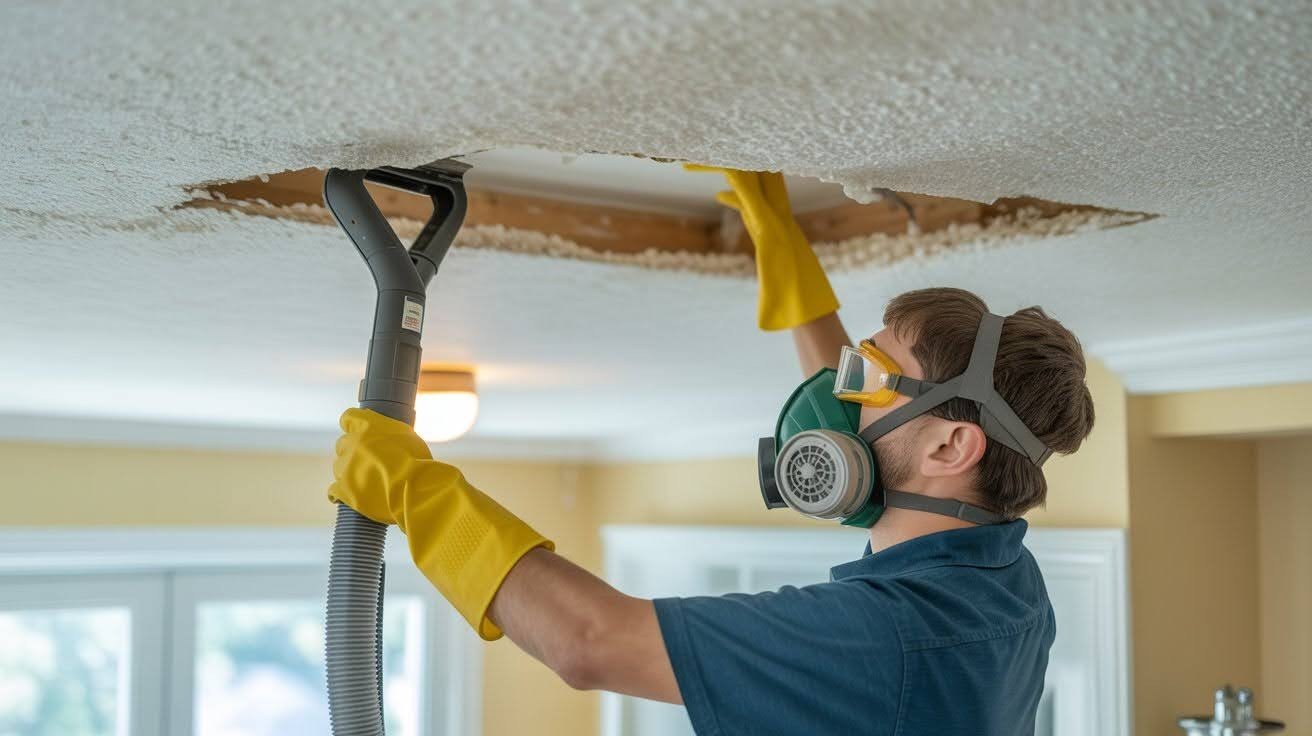
Some situations are too risky to handle yourself. If your ceiling was built before 1980, it may contain asbestos and require professional testing and removal.
Large water damage or sagging areas indicate structural problems that need expert assessment.
Hard-to-reach or very high ceilings pose safety risks without proper equipment. Licensed environmental or cleaning services have the right tools, training, and insurance to handle these jobs safely.
They can also spot hidden problems you might miss. Spending money on professionals now can save you from costly repairs or health issues later.
Maintenance Tips for Popcorn Ceilings
- Clean your ceiling at least once a year, or more often if dust builds up quickly
- Use air purifiers to reduce airborne particles that settle on the ceiling
- Dust furniture and surfaces regularly to minimize ceiling buildup
- Keep humidity levels low with dehumidifiers or proper ventilation
- Run bathroom fans during showers to prevent moisture damage
- Fix leaks quickly to protect your ceiling from water stains and mildew
Conclusion
Cleaning popcorn ceilings doesn’t have to be scary when you use the right method. The best approach depends on your ceiling’s age, current condition, and what tools you have at home.
Start with gentle methods like vacuuming or dusting for regular maintenance. Save the wet cleaning for stubborn stains. Always test for asbestos if your home was built before 1980.
Safety comes first. Now it’s your turn. Have you tried any of these methods? Do you have a trick that works wonders on your ceiling?
Drop your tips in the comments below. Your experience could help someone else tackle their cleaning project with confidence.
Frequently Asked Questions
Can I use a wet mop to clean my popcorn ceiling?
No, wet mops use too much water and can damage the texture. The moisture will cause the popcorn material to soften and fall off, leaving bare patches on your ceiling.
How often should I clean my popcorn ceiling?
Clean your popcorn ceiling at least once a year for regular maintenance. If you live in a dusty area or have pets, you may need to clean it every six months.
Will vacuuming damage my popcorn ceiling?
Vacuuming is safe if you use a soft brush attachment and low suction. Keep the brush moving gently across the surface without pressing hard against the texture.
Can I remove the popcorn ceiling texture myself?
You can remove it yourself only if it doesn’t contain asbestos. Homes built before 1980 need professional asbestos testing first, as DIY removal can release dangerous fibers into the air.
What’s the best way to remove cobwebs from popcorn ceilings?
Use a lint roller or a slightly damp microfiber duster for cobwebs. Both methods grab the webs without damaging the texture, and they’re quick for spot cleaning.